Growing concerns about the environmental and health impacts of flaring, coupled with increasing evidence that flare systems may perform less efficiently than previously assumed, have intensified the need for accurate quantification of flare efficiency.
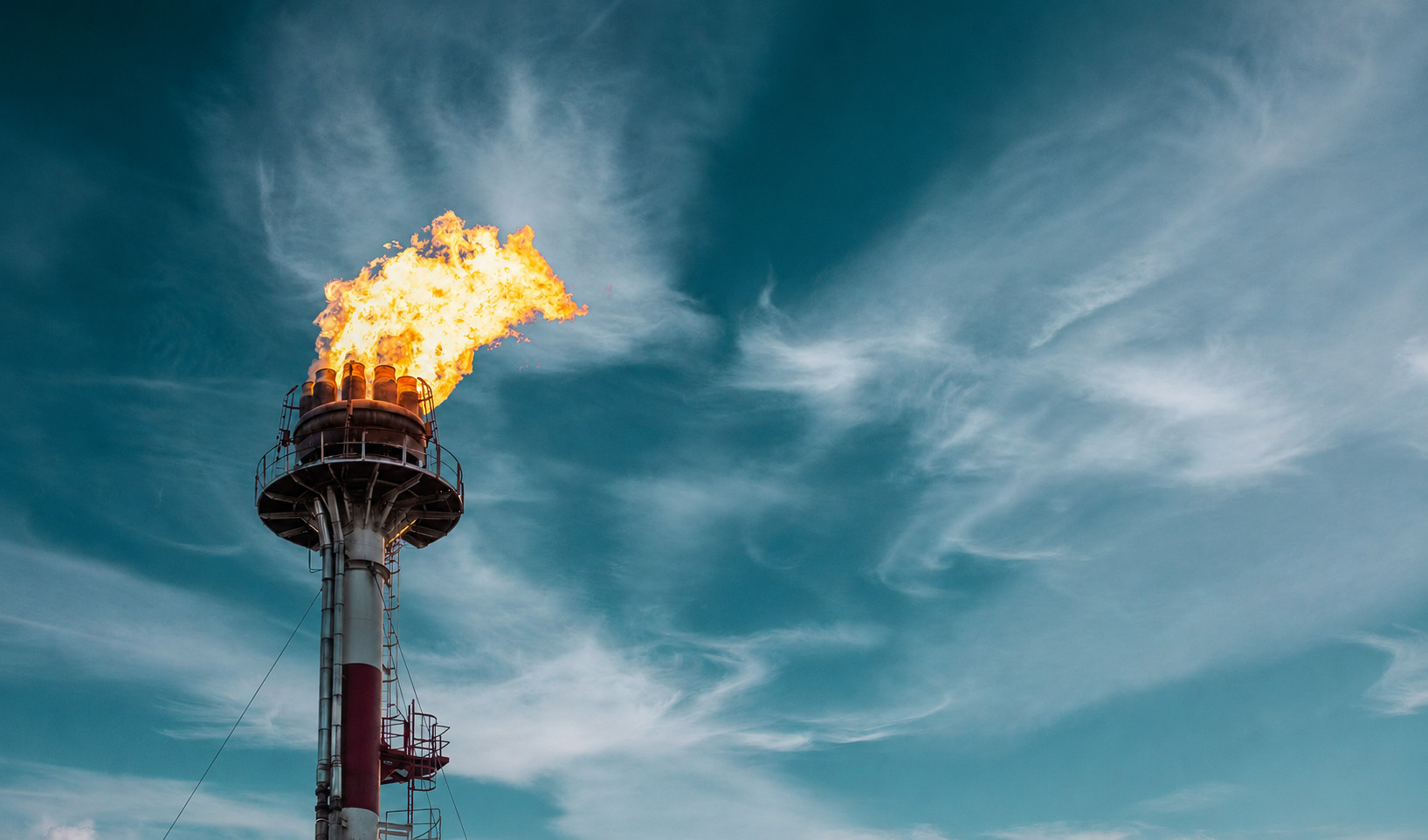
Flaring is widely used to manage and dispose of excess flammable gases generated across industrial sectors, including refinery waste streams, associated gases from oil and gas production, and gaseous waste from chemical production processes. At global scale, the volumes involved are significant: according to the World Bank’s 2025 Global Gas Flaring Tracker, flaring reached 151 billion cubic metres in 2024, the highest level since 2007, releasing 389 million tonnes of CO₂-equivalent, including 46 million tons as unburnt methane.
For decades, the practice has operated under a shared assumption: that flares achieve a combustion efficiency of at least 98%, provided certain operating conditions are maintained. That assumption is now under empirical scrutiny. Recent field studies have found real-world flare efficiency ranging from above 99% to below 90% across facilities, with crosswinds alone capable of doubling methane emissions. The 98% figure was a design assumption, not a measured average. Accurate quantification of flare performance is therefore essential for reducing greenhouse gas emissions, improving reporting accuracy, and demonstrating compliance with increasingly demanding regulations.
Two key metrics: CE and DRE
Combustion efficiency (CE) measures the fraction of hydrocarbons completely converted to CO₂ during combustion.

Destruction and removal efficiency (DRE) quantifies the fraction of hydrocarbons destroyed and converted into any combustion product (CO₂, CO, or soot). By definition, DRE is always equal to or higher than CE. In practice, DRE is often reported on a compound-specific basis, most critically for methane, given its climate significance.
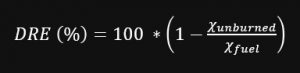
Both metrics matter: even small improvements in flare performance translate into substantial emissions reductions. Going from 98% to 99% efficiency reduces unburnt methane emissions by 50%, as only half the previous volume escapes uncombusted.
Applicable regulatory frameworks
The three principal frameworks driving this are the European Union Methane Regulation (EU 2024/1787), EPA NSPS OOOOb, and OGMP 2.0, each of which places accurate flare performance quantification at the centre of compliance.
Historically, regulatory compliance relied on the assumption that flares would achieve a CE of 98%, provided that specific operating conditions were maintained: minimum net heating values, flare tip velocity limits, and the continuous presence of a pilot flame. This is changing. Under EPA NSPS OOOOb, finalised in March 2024, operators are no longer permitted to assume combustion efficiency based on design; they must demonstrate it through continuous monitoring and validated performance data. Within the broader EPA framework, both 40 CFR 60.18 and 40 CFR 63 Subpart CC have long established a minimum DRE of 98% for flares across different sectors, making OOOOb the latest and most demanding layer of a consolidated regulatory trajectory.
The EU Methane Regulation (EU 2024/1787) requires all flare stacks, both newly installed and existing, to achieve a DRE of at least 99% by design. OGMP 2.0, while not setting a specific efficiency threshold, moves away from generic emission factors entirely, requiring source-level, measurement-based flare reporting. Different mechanisms, same direction: demonstrated performance over assumed performance.
The challenge of measuring flare efficiency
Flare combustion exhibits significant temporal and spatial variability, meaning that efficiency is not constant over time or throughout the flare.
Temporal fluctuations arise from phenomena such as flame flickering and sputtering, which can alter combustion conditions over both short and long timescales. Spatial variability is driven by temperature gradients and the presence of localized hot and cold regions within the flame, each potentially exhibiting different combustion characteristics. Beyond these, flare efficiency is shaped by a combination of factors: flare design and size, the presence and type of assist systems (steam, air, or pressure-assisted), wind speed and direction, vent gas composition and net heating value, and operational conditions including malfunctions or upsets. The interaction between these variables makes efficiency highly dynamic and difficult to characterize from a single measurement point.
These complexities raise several important questions for flare operators:
- How long should flare efficiency be monitored to obtain representative results?
- What level of measurement precision is required to distinguish between efficiencies such as 98% and 99%?
- How can operators continuously demonstrate compliance with increasingly stringent methane regulations?
- Which monitoring technologies are capable of providing reliable, real-time flare performance data?
SENSIA‘s solution: continuous flare efficiency monitoring with Agni and RedLook™
While a range of methods can be used to measure flare efficiency, remote optical sensing offers a safer, more cost-effective, and scalable alternative. It enables continuous or periodic retrieval of CE and DRE directly from operating flare stacks, without the need for personnel in proximity to the flare and without interruption to site operations.
At SENSIA, we have developed Agni, a bi-spectral infrared imaging system that simultaneously acquires radiometric data in two spectrally selective bands: one sensitive to unburned hydrocarbons and another tuned to CO₂ as the combustion product. Combined with RedLook™, our AI-based reporting platform, the system is capable of measuring CE and DRE in real time, every second. Agni captures the full spatial extent of the combustion zone, directly addressing the temporal and spatial variability that makes periodic or point-based measurements unreliable.
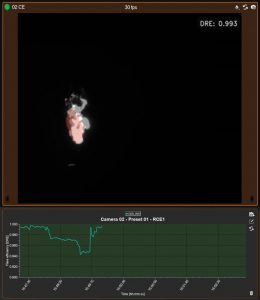
The system is designed to:
- Monitor multiple flares simultaneously
- Operate fully unattended, without on-site personnel
- Deliver second-by-second CE and DRE output, 24/7 and under any weather or lighting conditions, providing continuous visibility of flare performance
- Provide data structured for regulatory reporting
RedLook™ and Agni are fully aligned with the current regulatory frameworks, helping operators transition from assumed to demonstrated flare performance.
Whether you are an integrator, technician, part of a service team, or end user looking to improve flare performance and meet methane reporting requirements, our experts can help.