Learn about LDAR programs, what they are, the value they deliver, and how Optical Gas Imaging (OGI) supports and strengthens their effectiveness.
What are LDAR programs?
LDAR (Leak Detection and Repair) programs are a long-established practice across the oil, gas, energy and petrochemical industries for detecting, quantifying, reporting, and reducing fugitive emissions. Originally driven by safety considerations, LDAR has evolved into a structured framework that combines emissions control, regulatory compliance, and operational efficiency as emissions mitigation and decarbonization have become key priorities.
In practice, LDAR programs involve the routine, systematic inspection of equipment and components such as valves, flanges, connectors, pumps, and compressor seals across production, processing, storage, and distribution assets. The goal is to identify leaks before they result in significant product losses or sustained emissions.
A “leak” is defined by a minimum detection threshold (typically expressed in mass flow rate, e.g., g/h, or concentration in ppm). This threshold, together with survey frequency, is the main lever regulators use to determine the stringency of an LDAR program: more sensitive methods generally allow less frequent surveys, while less sensitive ones require more frequent inspections.
LDAR is now embedded in major regulatory frameworks, including U.S. EPA (OOOOa/b/c), OGMP 2.0, and EU Regulation 2024/1787, each of which defines its own component coverage, survey frequency, and detection threshold requirements.
For a detailed breakdown of inspection frequencies and requirements across these frameworks, refer to our article on methane mitigation regulations.
Benefits of LDAR Programs
Well-implemented LDAR programs deliver measurable value across environmental, economic, safety, and compliance dimensions:
- Significant Emission Reduction and Product Conservation:
A large-scale randomized controlled study in Red Deer, Canada (published in Environmental Science & Technology), found approximately a 50% reduction in the number of detected leaks at facilities with active LDAR interventions compared to untreated control sites. This directly translates into conserved product and reduced revenue loss.
- Comprehensive Leak Inventory and Prioritization:
Systematic surveys build a complete record of all leak sources across the facility, allowing operators to quantify the magnitude of each leak and prioritize repairs based on actual emission impact rather than assumptions.
- Verification of Repair Effectiveness:
Continuous or repeated monitoring after maintenance confirms whether repairs stopped the leak, rather than assuming compliance based on the repair action alone.
- Regulatory Alignment:
It is not just best practice. Robust LDAR programs support compliance with evolving regulatory frameworks, helping operators avoid penalties, maintain licenses to operate, and strengthen ESG performance.
The role of OGI in LDAR programs
A significant portion of fugitive emissions originates at the component level (valves, flanges, connectors, etc.) and requires precise, close-range inspection. This is where Optical Gas Imaging (OGI) remains essential.
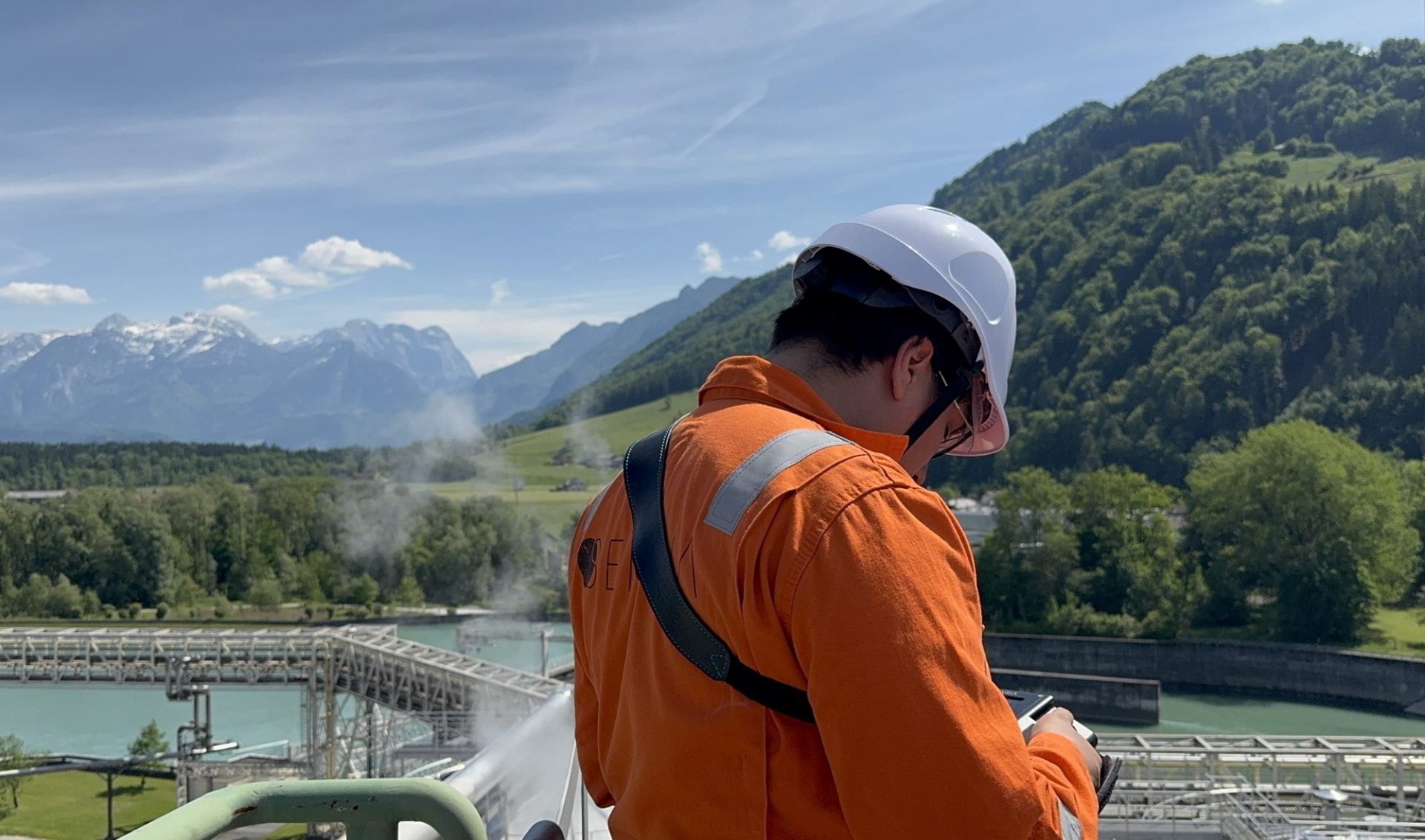
OGI allows operators to visualize gas plumes in real time using infrared imaging. This makes surveys significantly faster and more efficient; a single operator can inspect many components across large areas in one shift, while improving safety by enabling detection from a distance and reducing exposure to hazardous locations. Quantitative OGI (QOGI) further enhances this capability by providing reliable emission rate estimates directly in the field. This delivers the quantitative data required by today’s regulatory frameworks for compliance, prioritization, and accurate reporting.
Backed by a broad portfolio of proprietary products and technologies, SENSIA specializes in Smart OGI solutions, including both portable systems for daily LDAR inspections and fixed continuous monitoring solutions designed to support and enhance LDAR programs at scale. SENSIA’s systems combine field-proven hardware with embedded RedLook AI-powered software for real-time detection, visualization, and high-accuracy quantification with minimized uncertainty.
Key advantages of SENSIA’s Smart OGI solutions:
- Alignment with U.S. EPA, EU Methane Regulation, and OGMP 2.0 requirements
- High-accuracy quantification with low measurement uncertainty thanks to RedLook AI algorithms
- Technical integration and commercial support for deployment at scale
- Calibration and maintenance services to keep certified systems compliant
- Access to RedLook Academy, our certification program for field operators and program managers
With deployments in more than 55 countries, SENSIA helps operators implement confident, efficient, and audit-ready LDAR programs that deliver real emissions reductions and operational excellence.